From Attorney Okojie
Housing Discrimination Can Happen Before Anyone Applies
No application is denied, because no application is ever submitted.
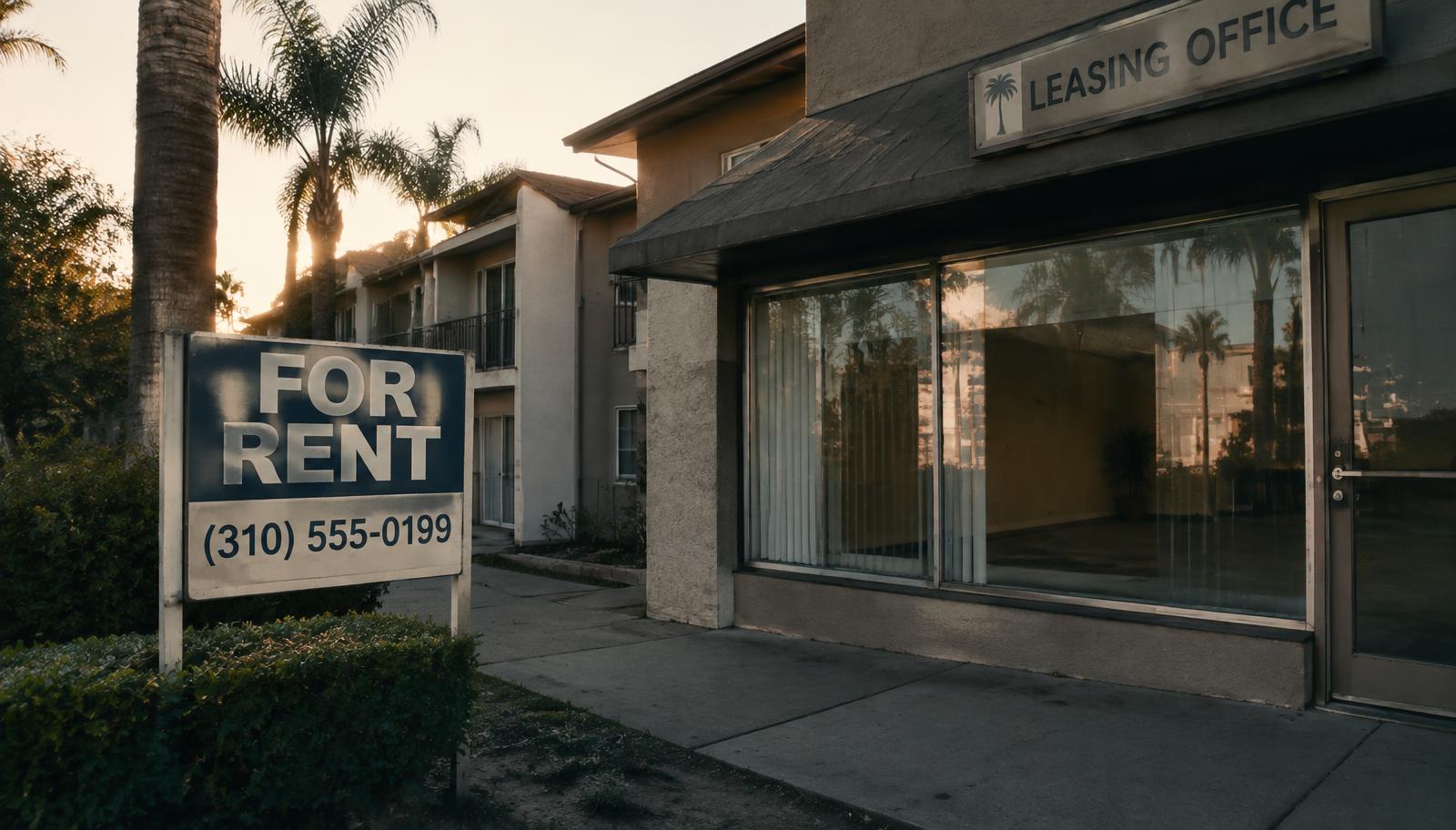
When people think about housing discrimination, they often imagine someone applying for an apartment and being rejected because of race, religion, disability or some other protected characteristic. But in many housing discrimination matters, the more difficult question arises much earlier.
What happens if the prospective tenant is discouraged before ever having an opportunity to apply?
I first encountered this issue as an undergraduate student in the early 1980s. I was living in the San Fernando Valley in Los Angeles County and remember visiting apartment complexes that displayed “For Rent” signs. When we asked the managers for applications, however, we were suddenly told that there were no vacancies.
At the time, the experience was difficult to prove and easy for a landlord to explain away. A sign could remain outside after an apartment had been rented. A manager could say that the available unit had just been taken. A prospective tenant could be left with no application, no written rejection and no clear explanation.
The issue became much more concrete when my then-girlfriend and I brought a housing discrimination case against a landlord in West Hills. We presented the matter to what was then the California Department of Fair Employment and Housing in downtown Los Angeles. The landlord’s position, as I recall it, was essentially that the law could not force him to rent to people he did not want to rent to.
That defense misunderstood the law.
The case eventually settled a couple of years later. I did not think much about its larger significance at the time. I was still a young man and had no idea that years later I would become a lawyer and spend a substantial part of my career representing people in employment, housing and other civil rights matters. Looking back now, I sometimes wonder whether that experience had more influence on the direction of my practice than I realized.
Fair housing laws do not generally require a landlord to rent to every person who applies. A landlord may consider legitimate, nondiscriminatory factors, such as lawful income requirements, rental history, creditworthiness and other neutral criteria. But a landlord may not refuse to rent because an applicant is Black or because of another protected characteristic.
The distinction is fundamental. A landlord may choose among qualified applicants using lawful criteria. A landlord may not decide that certain people should never have the opportunity to apply.
The Law Reaches More Than the Final Decision
The federal Fair Housing Act and California’s Fair Employment and Housing Act generally prohibit housing discrimination based upon protected characteristics, including race, color, national origin, ancestry, religion and disability. (42 U.S.C. § 3604; Cal. Gov. Code § 12955.) These protections are not limited to the final decision on a completed rental application.
Federal law, for example, makes it unlawful to represent to a person, because of a protected characteristic, that a dwelling is unavailable when it is in fact available. Fair housing law also reaches certain discriminatory practices that discourage people from pursuing housing opportunities or steer them toward or away from particular housing.
Steering is important because housing discrimination does not always require someone to say, “You cannot live here.”
Consider a family looking for an apartment. They inquire about a particular building and are told that another property might be more suitable for them. Perhaps they are encouraged to look in another part of town. Maybe they are told that they would be more comfortable in a different building or neighborhood.
There may be perfectly legitimate reasons for making such a suggestion. But if the recommendation is being made because of the prospective tenant’s race, ethnicity, religion, national origin, disability or another protected characteristic, a seemingly helpful suggestion may raise serious fair housing concerns.
The prospective tenant may never know. The person simply follows the suggestion, visits another property or begins looking elsewhere. No application is denied because no application is ever submitted.
A similar problem can arise when a housing provider gives different information about availability. Suppose a person calls about an apartment advertised for rent and is told that it has already been rented. Most people would accept that answer and continue looking.
But what if the apartment was actually still available?
The person who made the inquiry may have no way of knowing that the housing opportunity was closed before the application process even began.
The First Conversation Matters
Over the years, we have encountered variations of this issue in matters involving ordinary apartment complexes as well as assisted living facilities. Families looking for housing for elderly relatives, for example, might begin with basic questions: Is there a room available? How much does it cost? Can we visit the facility? What level of care do you provide?
Those first conversations matter. A family told that there are no vacancies will ordinarily call another facility. A family told that an elderly parent may not be comfortable because most residents belong to a particular cultural community may simply conclude that the facility is not an option.
The practical effect can be the same as a rejection, even though nobody formally rejected anyone.
The same principle can apply to disability discrimination. A person with a disability may ask about an available apartment or assisted living arrangement and encounter assumptions about what that person can or cannot do, what accommodations might be necessary or whether the person would be better served somewhere else.
Housing providers may certainly consider legitimate eligibility requirements and, in appropriate settings, whether they can lawfully provide the services a prospective resident requires. But decisions should not be based upon stereotypes or assumptions about disability. Fair housing laws also impose reasonable-accommodation obligations in appropriate circumstances, and the existence of a disability should not itself become a reason to discourage someone from pursuing an otherwise available housing opportunity.
Religion can present similar concerns. A housing provider may operate in a community where many residents share a particular faith or where religious practices are an important part of community life. That circumstance does not ordinarily permit the provider to decide that someone of another faith would be happier elsewhere.
Of course, not every discouraging conversation amounts to discrimination. Apartments really do get rented. Assisted living facilities really do reach capacity. There may be legitimate financial, licensing, safety, care-related or other lawful reasons why a particular housing arrangement is unavailable or unsuitable.
Context matters.
But that is also why what happens before an application is submitted should not be overlooked. What was said? Was the housing actually available? Why was another property suggested? Was the person given information about how to apply? Was the prospective tenant encouraged to continue the process or quietly encouraged to leave it?
For housing providers, the lesson is relatively straightforward. Fair housing compliance should not begin when a completed application reaches the leasing office. It should begin with the person answering the telephone, responding to an online inquiry, greeting someone who walks into the leasing office or showing an available unit.
And for prospective tenants and their families, it is worth remembering that a person does not necessarily have to receive a formal rejection before fair housing rights become relevant.
Sometimes the most important housing decision occurs before anyone fills out the first line of an application.
Equal housing opportunity must include an equal opportunity to get to the application in the first place.
Disclaimer: The information contained in this article is provided for educational and informational purposes only and should not be construed as legal advice. Every case is unique, and the outcome of any legal matter depends upon its particular facts and circumstances. References to investigations, allegations, lawsuits, settlements, verdicts or prior matters are intended solely to illustrate legal principles and do not guarantee or predict similar results in any future matter. Nothing in this article creates an attorney-client relationship between the reader and Okojie Law. Individuals facing legal issues concerning housing discrimination, disability accommodations, employment discrimination, retaliation, harassment, personal injury or other civil rights matters should consult qualified legal counsel regarding their particular circumstances.
Turned away before you could apply?
Consultations are free and confidential. Bring whatever you have, listings, texts, call notes, names and dates.