From Attorney Okojie
Reasonable Accommodations Are Not Special Favors: Understanding Disability Rights in Housing
A ramp at a stairs-only entrance is not an advantage. It is the removal of a barrier.
One of the recurring themes I encounter in housing discrimination cases is the notion that a disabled tenant who requests a reasonable accommodation is somehow asking for special treatment. Sometimes the sentiment is expressed openly. Other times it is implied by comments such as, “If we do it for her, we’ll have to do it for everyone,” or “The rules apply equally to all residents.” On occasion, other tenants even question why a disabled resident appears to be receiving a benefit that is unavailable to everyone else.
While these reactions are understandable, they are based upon a fundamental misunderstanding of what fair housing laws are designed to accomplish. A reasonable accommodation is not a favor. It is not an act of charity. It is not something a housing provider grants out of kindness or generosity. It is a legal right recognized under both federal and California law and one of the principal tools by which our society seeks to ensure that persons with disabilities have the same opportunity to enjoy housing as everyone else.
To understand why these protections exist, it helps to remember that disability discrimination was not originally addressed in the federal Fair Housing Act. When Congress enacted the Fair Housing Act in 1968, its focus was primarily on combating discrimination based on race, color, religion, and national origin. It would take another twenty years before Congress recognized that persons with disabilities faced many of the same exclusionary barriers in housing and amended the law to include disability protections. By then, countless Americans with disabilities had already experienced what it meant to be denied meaningful access to housing because policies, practices, and attitudes failed to account for the realities of living with a disability.
Congress understood something that remains true today. Many barriers facing disabled individuals are not created by hostility or prejudice. More often, they arise from rules that appear neutral on their face but operate very differently in practice. A policy may treat everyone identically while still imposing a disproportionate burden on a person whose disability affects mobility, vision, hearing, mental health, or some other major life activity. That is why fair housing laws require more than equal treatment. They require equal opportunity.
Over the years, I have found that one of the easiest ways to explain this concept is to ask a simple question. If a building has only stairs at its entrance, is the installation of a wheelchair ramp special treatment? Most people instinctively answer no. They recognize that the ramp exists not to give wheelchair users an advantage but to remove a barrier that prevents access. The same principle applies to reasonable accommodations. They are not designed to elevate disabled individuals above others. They are designed to remove barriers that prevent disabled individuals from enjoying housing on equal terms with their neighbors.
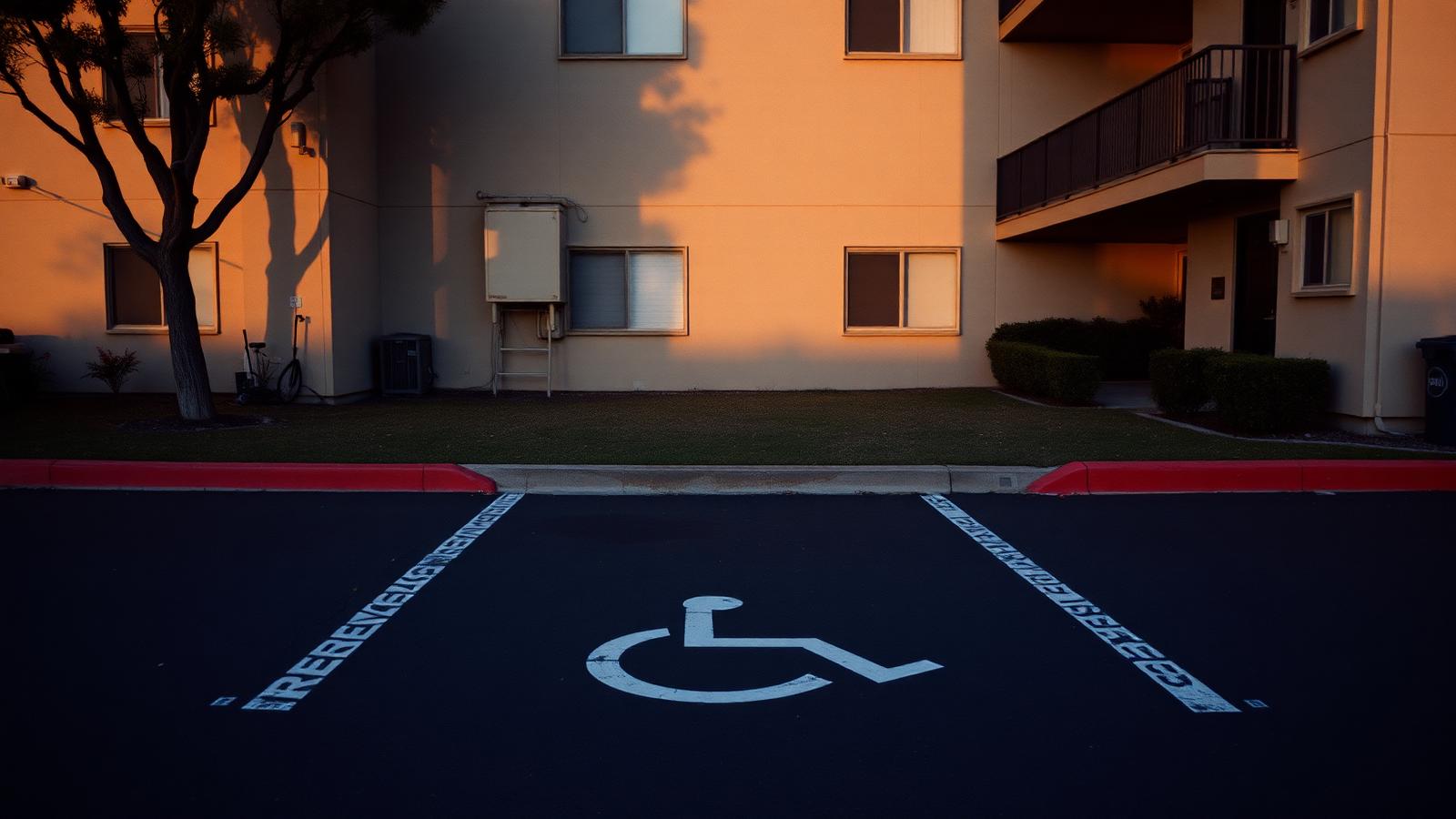
A case our office handled several years ago illustrates the point well. Our client was a wheelchair user living in an apartment complex that had a designated handicap parking space located directly in front of her apartment. Because of her mobility limitations, she requested that the space be reserved for her exclusive use as a reasonable accommodation. She was not asking the landlord to construct a new parking area, spend thousands of dollars on renovations, or undertake some burdensome project. She simply wanted assurance that the accessible parking space closest to her home would be available when she returned from work, medical appointments, grocery shopping, and other daily activities.
The request was denied.
The consequences of that denial became apparent almost immediately. Our client would frequently return home and discover vehicles parked in the designated accessible space that did not even display disability placards. When she complained, management’s response was not to enforce the rules governing the handicap parking space. Instead, she was essentially told that if she wanted those vehicles removed, she could contact law enforcement herself.
Think about what that meant in practical terms. A wheelchair-using resident was being told that if she wanted access to the handicap parking space located directly in front of her home, she should become the property’s parking enforcement officer. Rather than addressing the problem, management shifted responsibility to the very person the accessible parking space was intended to protect.
That response highlights why accommodation cases are about much more than parking spaces, companion animals, or policy manuals. They are about dignity. They are about independence. They are about whether a disabled resident can go about daily life without being forced to overcome obstacles that able-bodied residents never have to think about.
From management’s perspective, the request may have appeared to be a request for special treatment because other residents did not have assigned parking spaces. From our client’s perspective, however, the request was simply an effort to enjoy her home with the same degree of convenience, safety, and independence that her neighbors already enjoyed every day. The accommodation was not creating an advantage. It was attempting to eliminate a disadvantage.
This same principle arises in countless other contexts. A tenant suffering from PTSD may request permission to keep a companion animal despite a no-pets policy. A visually impaired resident may request documents in an accessible format. A hearing-impaired tenant may request alternative methods of communication. In each situation, someone inevitably asks why an exception is being made for one resident but not others.
The answer is simple. The disability creates a need that does not exist for other residents. The accommodation is not designed to confer a benefit. It is designed to remove a barrier.
California law recognizes this principle perhaps even more strongly than federal law. While the Fair Housing Act provides significant protections for persons with disabilities, California’s Fair Employment and Housing Act often provides broader protections and reflects this state’s longstanding commitment to ensuring equal housing opportunity. Indeed, one of the reasons our office carefully evaluates whether to proceed under federal law, California law, or both is that the remedies, procedural advantages, and legal protections can differ depending upon the circumstances of the case. The important point is that both bodies of law recognize that reasonable accommodations are not optional acts of goodwill. They are civil rights protections.
Unfortunately, housing providers sometimes view accommodation requests through the wrong lens. Rather than asking whether the law requires a modification of a policy, they ask whether they want to grant an exception. That mindset can create significant problems. The relevant question is not whether management believes a request is fair. The relevant question is whether the accommodation is necessary to afford a person with a disability an equal opportunity to use and enjoy housing and whether granting the accommodation would impose an undue burden or fundamentally alter the nature of the housing provider’s operations.
At the end of the day, every reasonable accommodation request involves a human being trying to live as independently and safely as possible. It may involve a veteran coping with PTSD, an elderly resident experiencing mobility limitations, or a person struggling with anxiety, depression, or another disability. What appears from the outside to be a small exception to a rule may make the difference between a resident thriving in his or her home and confronting unnecessary barriers every single day.
That is why reasonable accommodations should never be viewed as special favors. They are not gifts bestowed by generous landlords. They are not privileges reserved for a select few. They are legal protections created to ensure that persons with disabilities have the same opportunity as everyone else to live with dignity, independence, and security in the place they call home.
Disclaimer: This article is intended for informational purposes only and does not constitute legal advice. Every housing discrimination matter involves unique facts and circumstances. Reading this article does not create an attorney-client relationship. If you believe you have experienced housing discrimination or have been denied a reasonable accommodation because of a disability, you should consult qualified legal counsel regarding your specific situation.
Denied a reasonable accommodation?
Consultations are free and confidential. Tell us what you requested, what management said, and what happened next.